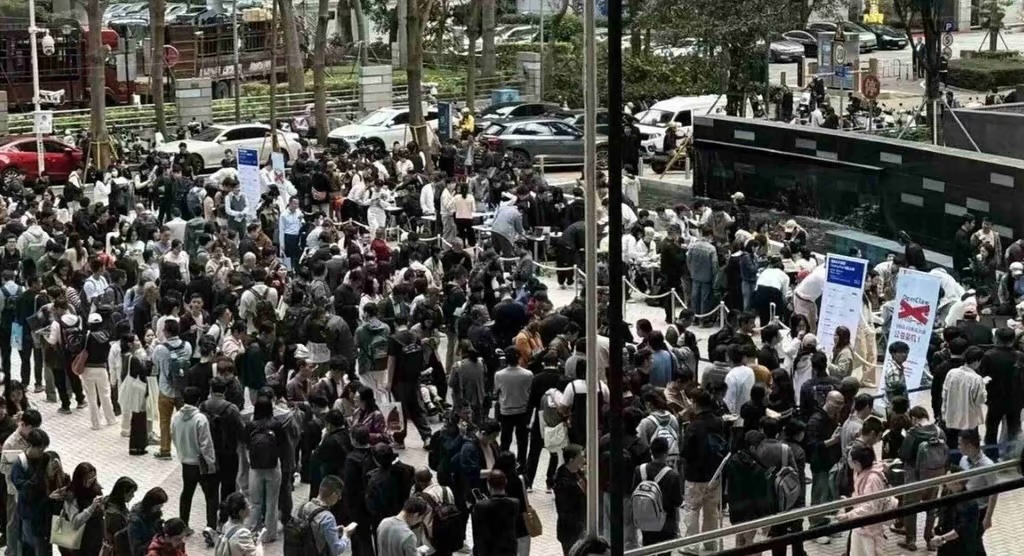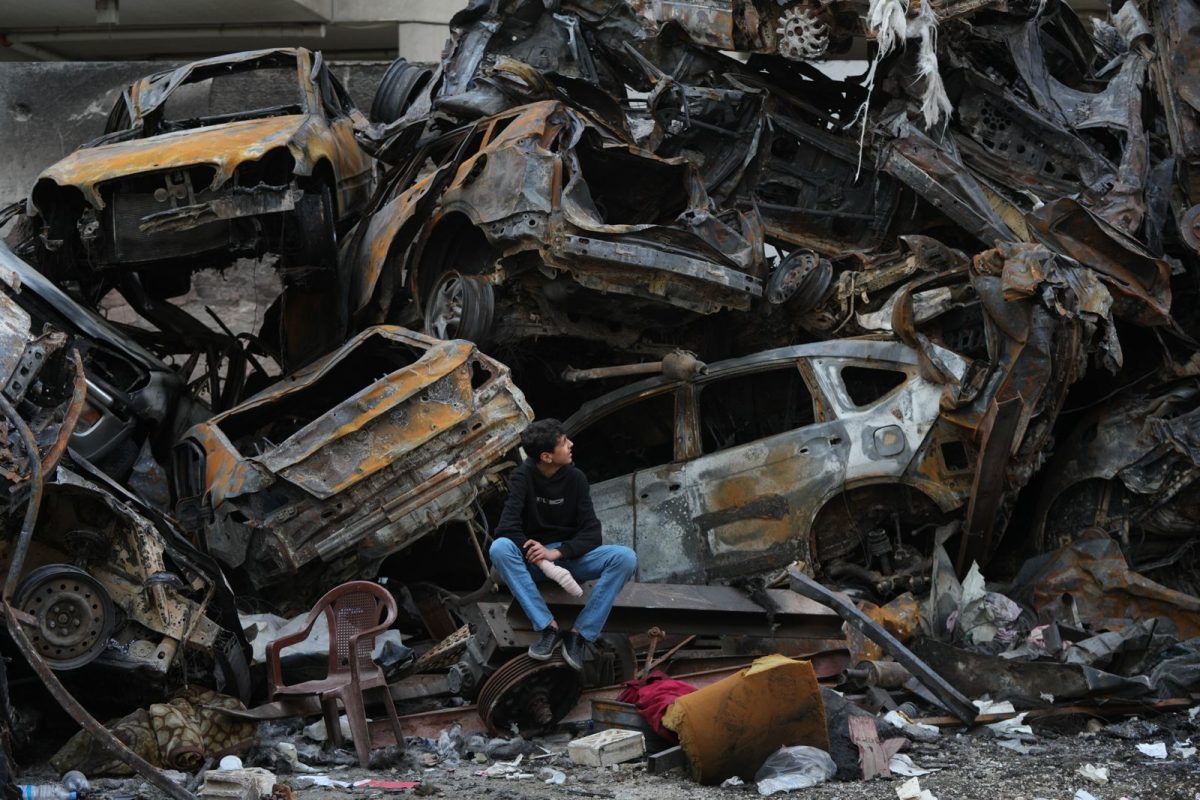
It is difficult to fathom the magnitude of an airstrike without witnessing it firsthand. The violent whoosh of a descending missile is the only semblance of a warning before a shattering boom splits the air, loud enough to burst an eardrum, strong enough to decimate an entire building, intense enough to create a shockwave that spans miles.
It is nearly impossible to fathom the impact of over one hundred airstrikes launched over the course of 10 minutes.
Shortly after noon local time on Wednesday, April 8, Lebanon witnessed this reality as Israel carried out its deadliest military operation on the country since the beginning of its attacks in September 2024. At least 350 have been killed and counting, with many bodies yet to be recovered from underneath the rubble, and over 1,200 have been injured. A temporary ceasefire agreement has been in place since April 16, allowing Beirut an uneasy period of respite, although Israel continues to assault homes and target civilians in South Lebanon.
Israeli officials claim to have targeted solely the infrastructure and weaponry of Hezbollah, a political group and armed wing in Lebanon. However, in Lebanon, what came to be known as Al Orba’aa al Aswad – Black Wednesday – is remembered as a day of national mourning for the children, families, and homes that were lost.
Those who survived the attacks face irreparable damage that will continue to impact them for the rest of their lives.
From a teenager who lost his home, to an emergency physician at a hospital, to a Red Cross first-responder, three separate stories from individuals offer a glimpse into the reality of attacks on Lebanon.
CORNICHE EL MAZRAA, BEIRUT – Of the first few targets, one was a relief center that had been established at the beginning of the war to offer food and medical supplies to the displaced. It was in a parking lot surrounded by nine residential buildings set close to one another. One was home to Issa al Issa, a 17-year-old boy – almost 18 and pointedly so – who worked as a hairdresser in Downtown Beirut.
He was asleep on the rooftop of his multi-story building, next to his 13-year-old sister, who was sitting through an online school lecture on her phone when it happened.
“We had no idea it was coming. They just suddenly hit,” al Issa recalled. The first strike awoke him with a jolt and he grabbed his sister’s hand. The second one snapped him out of his shock and he began to run to the ground floor, pulling his crying sister with him. The third strike obliterated the outer wall of the building, leaving an abyss to either side of them as they wove through the crumbling infrastructure of a building that was falling apart. He reached his apartment on the second floor only to see a gaping hole where his kitchen and bathroom once were. “I thought that was it: my family was dead,” al Issa said.
Somehow, all eight family members in his apartment survived. There was no safe way out of the building until a resident set a ladder to the mouth of the hole in the wall for the family to climb down. Al Issa’s two cousins, both infants, had to be thrown into the arms of passersby on the ground from the second floor.
When I asked him to describe the scene outside, what was more upsetting than al Issa’s response was the numbness with which the teen described the devastation.
“I was just standing and staring at the ambulances entering the street. I saw something in the corner of my eye and when I got closer, it was a man’s leg. Just the leg,” he said flatly. Everywhere, the Red Cross was salvaging severed arms, hands, legs. “There was a [severed] head near Al Sultan Sweets,” he added.
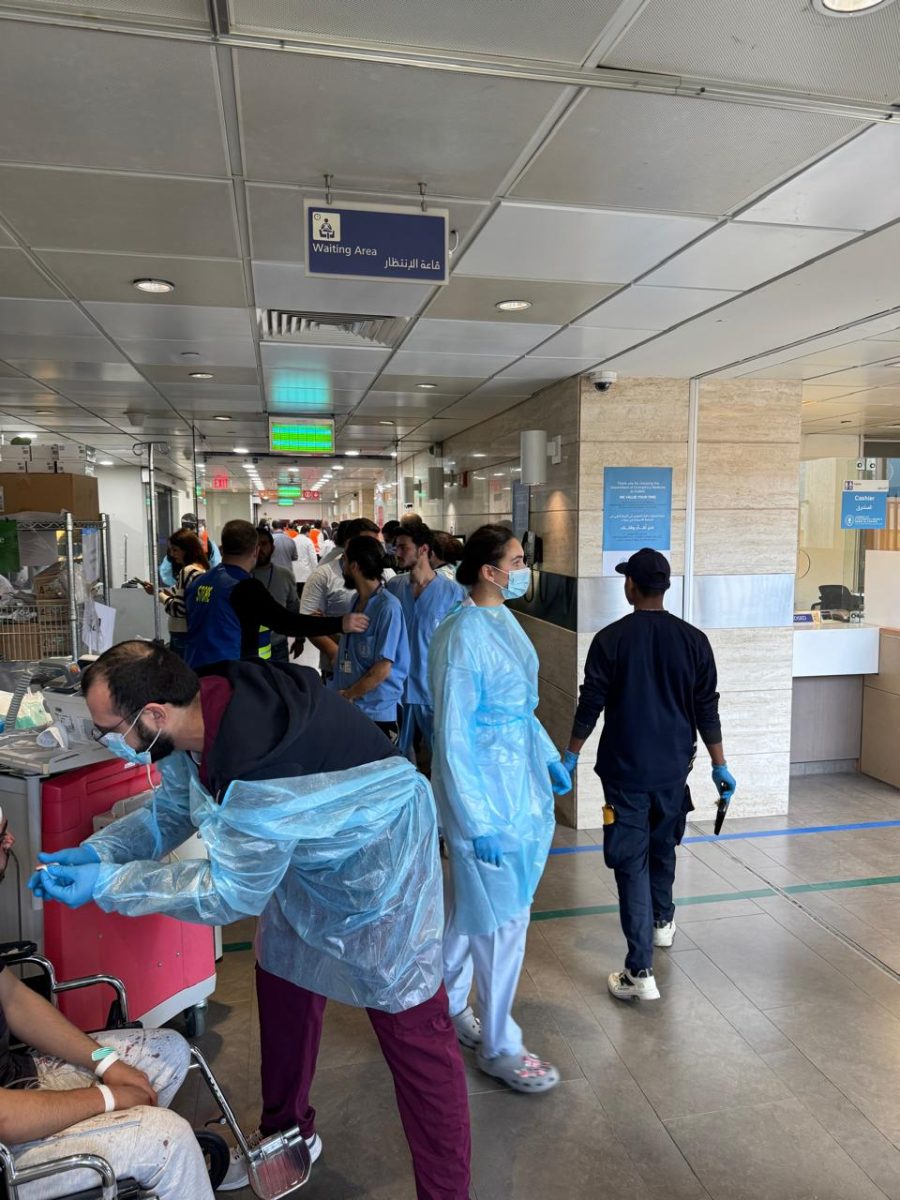
HAMRA, BEIRUT – Dr. Sarah Jaber was the attending physician on shift at the American University of Beirut Medical Center (AUBMC) when the first few strikes hit surrounding areas.
Jaber had returned to Lebanon four years ago after completing her residency at the University of Miami. There, she went through intensive high acuity training. “We used to see a lot of amputees, a lot of trauma back in my residency… but I would say it was nothing compared to what I saw,” said Jaber, remembering April 8.
This was the doctor’s first mass casualty. After quickly calling her husband and mother to make sure they were okay, “code D” was called and the emergency department jumped into its mass casualty response protocols, and Jaber braced herself for what was to come. “I was ready to face anything… what I wasn’t ready for was getting a kid.”
The first patient that arrived at the emergency department that day was a 4-year-old boy, covered in blood, cloaked in dust, unable to open his eyes.
He was brought in on a motorcycle by passersby who did not know him – his parents had been killed, their bodies trapped under the rubble of their home.
It was clear that debris had penetrated both his eyes and caused damage.
She asked him for his name — the typical protocol to assess responsiveness. But when he did not respond, she did not know whether it was because his airway was blown, whether he had sustained a head injury, or whether he was simply too traumatized to speak.
Jaber herself has a son not much younger than the patient. “All I wanted to do was just not be that kid’s doctor. I wanted to be that kid’s mom,” she said. For many days after the attacks, she would come to be haunted by the image of the patient every time she looked at her son.
“All I could see were the eyes – closed – and me trying to open them,” she said. While it was generally her priority to focus only on life-threatening injuries, at that moment, she could not help but fixate on the fact that this child could not open his eyes. “I just need to see his eyes. It was something beyond the medical aspect of it… it was me needing to see that he was OK emotionally… and I couldn’t see his eyes. I really needed to see his eyes because it would have made me feel OK, and the fact that I couldn’t… well, I couldn’t sleep at night because I couldn’t see the eyes of that kid. ”
A few days later, Jaber asked about the child. He had endured multiple brain bleeds and facial fractures on that first day. It is difficult at this point to know what neurological deficits he will have to face.
The 4-year-old child was one of many children admitted into the hospital that day. He was also one of many patients that had suffered brain injuries – among many other types: abdominal injuries, fractures, the result of being crushed by the rubble of their own homes.
CORNICHE AL MAZRAA, BEIRUT – Ali, a member of the Red Cross Urban Search and Rescue team (USAR), whose name has been changed because he feared reprisals from Israel, like many other first responders, was in one of two emergency vehicles on call that afternoon.
Ali’s team eventually ended up arriving at the disaster zone of al Issa’s house, although they have never met.
Chaos and devastation engulfed the scene. Cars had caught on fire, emitting thick, black smoke that made it difficult to breathe. Ambulances and fire trucks hurtled into the flames while people, shell-shocked and covered in blood, ran out seeking help. Most of them were women and children.
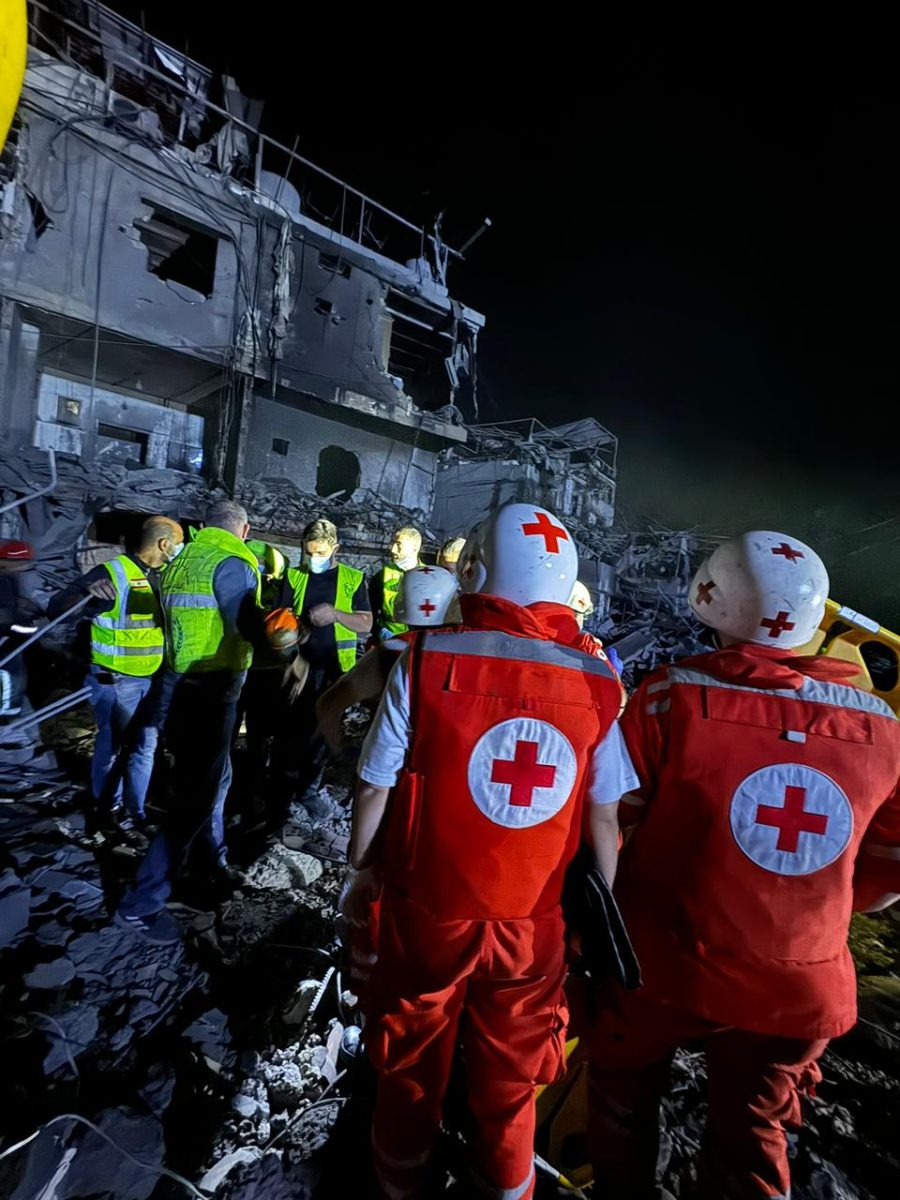
As Ali witnessed the devastation around him and family members pleading for help finding loved ones beneath the wreckage, he was reminded of an earlier attack in 2024, when an airstrike struck near the Hariri Government Hospital in Jnah, Beirut. Besides tending to injuries and transporting victims to the hospital, his role entailed responding to the desperate pleas of survivors to recover bodies from under the rubble.
At that time, two parents approached who had lost their daughter. There was little information for them to give besides the fact that she wore green pajamas. Sure enough, after an hour of digging, a young face appeared. The body wore green pajamas. The USAR team placed her in a body bag in the back of the ambulance.
The father followed Ali to the ambulance, pleading for answers. Ali opened the bag but upon seeing the horrific sight within, immediately closed it before the father could see.
The body was decapitated and the girl’s head rested beneath her legs. He couldn’t say anything other than, “We can’t identify the body right now.” The father, however, insisted: “Check her hand. There is a heart-shaped tattoo on her finger.”
Ali cleaned the body’s hand with sterile water, revealing a heart-shaped tattoo. The father broke into sobs and threw himself on top of his daughter. “Wen rasek ya habibte? Rasek wen?” Where is your head my love, where is your head?, he cried. The father’s voice reached his wife, telling her all she needed to know. The man and woman had just lost their child in the most gruesome way one could imagine.
Issa al Issa and his family are among more than a million people who have been displaced in Lebanon. The 4-year-old child was one of hundreds orphaned. As Israeli attacks continue, many in Lebanon worry they face a future that resembles the devastation in Gaza.
Note: This story has been updated to clarify the timing of the airstrike.