This article launches our Guidelines for Internationals series, a collection created to help newcomers make sense of Boston’s systems, stories, and everyday realities. We begin with housing, a challenge that shapes the earliest experiences of many international students. By unpacking the structural barriers in the rental system and offering concrete paths for support, we hope to make the city feel a little more navigable. Throughout this series, we’ll continue exploring the issues that matter most to internationals and the resources that can help them find their footing and their place in the community.
It has been three months since Boston introduced a long-awaited reform to its rental system: tenants no longer need to pay their fee unless they specifically hire a broker. But what international students are still facing in the housing issue is far from the cost.
In this article, we aim to figure out how these newcomers experience the identity challenges of being “outsiders.”
The high price of studying in Boston
Boston is one of the most expensive cities in the United States for renters. Before the policy change, many tenants had to prepare the equivalent of four months’ rent upfront — covering the first month, last month, a security deposit, and a broker fee. In a city where the median two-bedroom rent exceeds $2,700, that upfront hurdle has long tested newcomers’ budgets.
According to Zillow’s October 2025 data, the average monthly rent for all bedrooms is $3200. The average rent for a two-bedroom unit is also approximately $3200. For that to be affordable, a household would need to earn over $110,000 per year — far above the average annual income of most graduate students.
.jpg)
.jpg)
For international students juggling tuition and visa work limits, compromises are inevitable.
Some choose shared bedrooms, paying between $500 and $1,200 a month. Others prefer studio or one-bedroom apartments, which typically range from $2,000 to $3,500 depending on the location and amenities.
Even with roommates, rising prices mean many students live far from campus, balancing longer commutes with the promise of slightly cheaper rent. For newcomers unfamiliar with Boston’s neighborhoods or pricing norms, even identifying a “good deal” can be confusing.
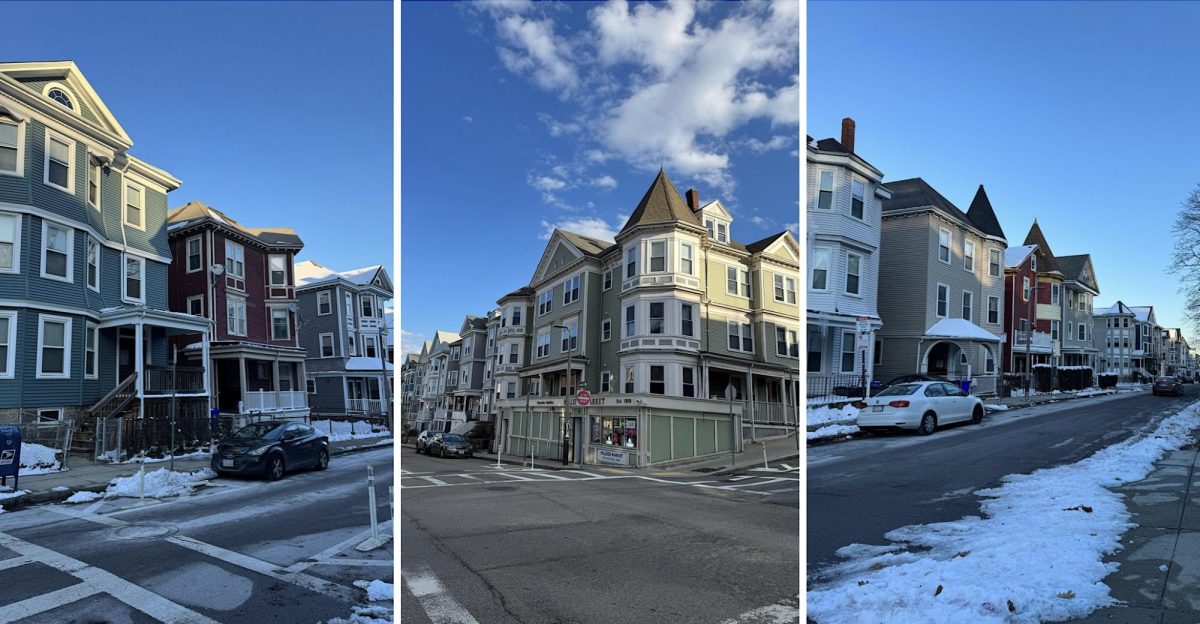
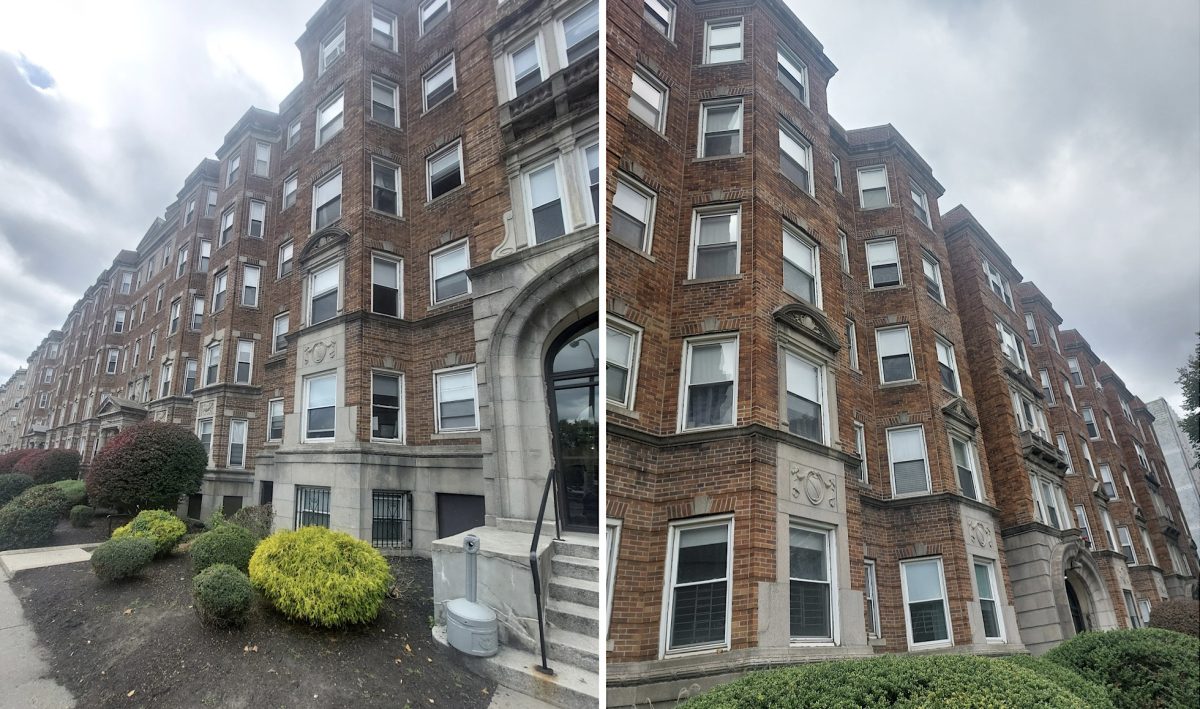
We’re collecting photos of apartments where international students typically live in Boston. While these don’t represent all housing options, they can give us a general idea of the kinds of apartments and houses students usually choose.
What Tools and Protections could you utilize?
In theory, eliminating tenant-paid broker fees should ease the move-in process. However, some housing advocates warn that landlords might pass those costs onto higher monthly rents, potentially reducing the immediate benefit. For international students, the real challenge remains navigating an unfamiliar system.
Thus, housing is not just about securing a place to live, but about learning how to claim belonging in a system that might not have been built for them. Throughout our research, there are some mechanisms that international students should be able to be aware of.
At the university level:
In Boston, where universities host a large population of international students, several institutions have established offices to address housing and rental issues that students may face off campus.
At Northeastern University, the Office of Off-Campus Engagement and Support offers guidance on communicating with landlords and helps students understand their tenant rights. The office connects students to on-campus and City of Boston resources, offers guidance on lease terms, renters’ insurance, and safe renting practices, and maintains an online housing database that lists apartments, sublets, and licensed realtors.
Similar offices exist at other Boston-area institutions, such as Boston University’s Off-Campus Services and Harvard University’s International Office, which provide comparable forms of support, including educational materials, workshops, and referrals to legal or housing assistance programs.
At the city’s level:
Several external tools are available to students who face unsafe living conditions, withheld deposits, or ignored repair requests. Many students we spoke with were unaware of them. Awareness of these options can turn a vulnerable renting experience into an informed one.
- Contact Boston’s Inspectional Services Department (ISD)
The ISD provides a free public service that inspects rental units and evaluates living conditions. This can be especially useful when an apartment has serious maintenance issues that have not been properly addressed for a long time. If inspectors identify code violations, they can order the responsible party to make necessary repairs. - Apply for a Rent Escrow Account
Under Massachusetts law, tenants have the right to withhold rent by depositing it into an escrow account until required repairs are made. This legal process ensures that tenants can maintain financial leverage while protecting themselves from retaliation for nonpayment. - Seek Free Legal Assistance
A number of universities and nonprofit organizations, including the City of Boston’s Office of Housing Stability, offer free legal clinics and multilingual support for tenants. Students can bring draft leases for review before signing to avoid unfair terms or hidden fees, and receive guidance if disputes arise during their tenancy.
Why the rule matters for newcomers
As an international student, they face three challenges.
Paperwork as a barrier
Without a U.S. credit score, job offer, or Social Security Number, international students often struggle to even qualify for a lease. In many cases, landlords request proof of income or local guarantors, which most new arrivals do not have. Students often resort to prepaying several months of rent to secure a place to live.
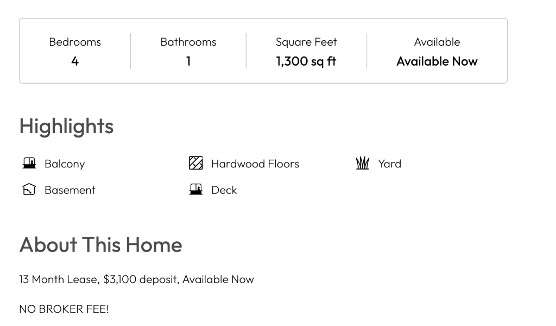
Even with new policy protections, some automated screening tools still reject applicants lacking U.S. credit, leaving students dependent on private negotiations or informal brokers. That’s why some apartments targeting international students highlight the message “no broker fee.”
However, their monthly rent is usually slightly higher than properties with a broker fee, while offering a similar quality of living conditions, making the total annual cost roughly the same.
A market within a market, a network limited by a network
For those who qualify, the search process can feel just as daunting.
Language-based networks like WeChat, WhatsApp, and Facebook provide comfort and community — but also create parallel markets, often less transparent and harder to verify. For international students, in some cases, informal or independent agents fill the gap left by institutional support.
Some licensed brokers targeting international students are themselves former international students. Even though they hold licenses, they are sometimes contracted by local agencies or apartment owners, which means the properties they can promote are often non-exclusive.
Under such conditions, the housing options available through these agents are quite limited, which in turn restricts international students’ access to typical or standard living conditions.
Moreover, there are cases where informal agents charge additional “service fees” for simply connecting students with landlords. This adds another layer of cost and complexity—even after the official broker-fee reform.
Beyond that, there is identity politics
Even after signing, many students face leases they don’t fully understand. Lease agreements can run over 20 pages and are filled with legal terms, addendums, and waivers. Without translation or review, students may agree to conditions that shift maintenance responsibilities or limit their rights.
These misunderstandings rarely reach city agencies. It is not because students are unaware of problems, but because many may fear they will jeopardize their visa status or simply do not know where to seek help.
Therefore, it is not just a housing issue – it’s also an identity issue. In other words, if they see you as an outsider because of language or status barriers, you may not develop the habit of seeking out the tools necessary to defend their rights.