From application to work authorization, international students navigate mounting barriers as economic impact threatens the state’s higher education sector.
Universities across Massachusetts are experiencing a drastic decline in international student enrollment by the 2025 fall, with a 17% drop nationwide, according to the Institute of International Education’s Open Doors Fall 2025 Snapshot, and steeper losses at some state institutions. The decline is attributed to the visa processing delays, policy changes under the Trump administration, and mounting uncertainty around post-graduation work permits. The current situation not only threatens campus diversity but also the local economies around universities, where international students play a significant role.
The economic impact of declining enrollment is already being felt. NAFSA: Association of International Educators estimates that the drop in new international student enrollment this fall will cost the U.S. economy $1.1 billion in lost revenue and approximately 23,000 jobs nationwide.
The ripple effect extends far beyond campus gates.
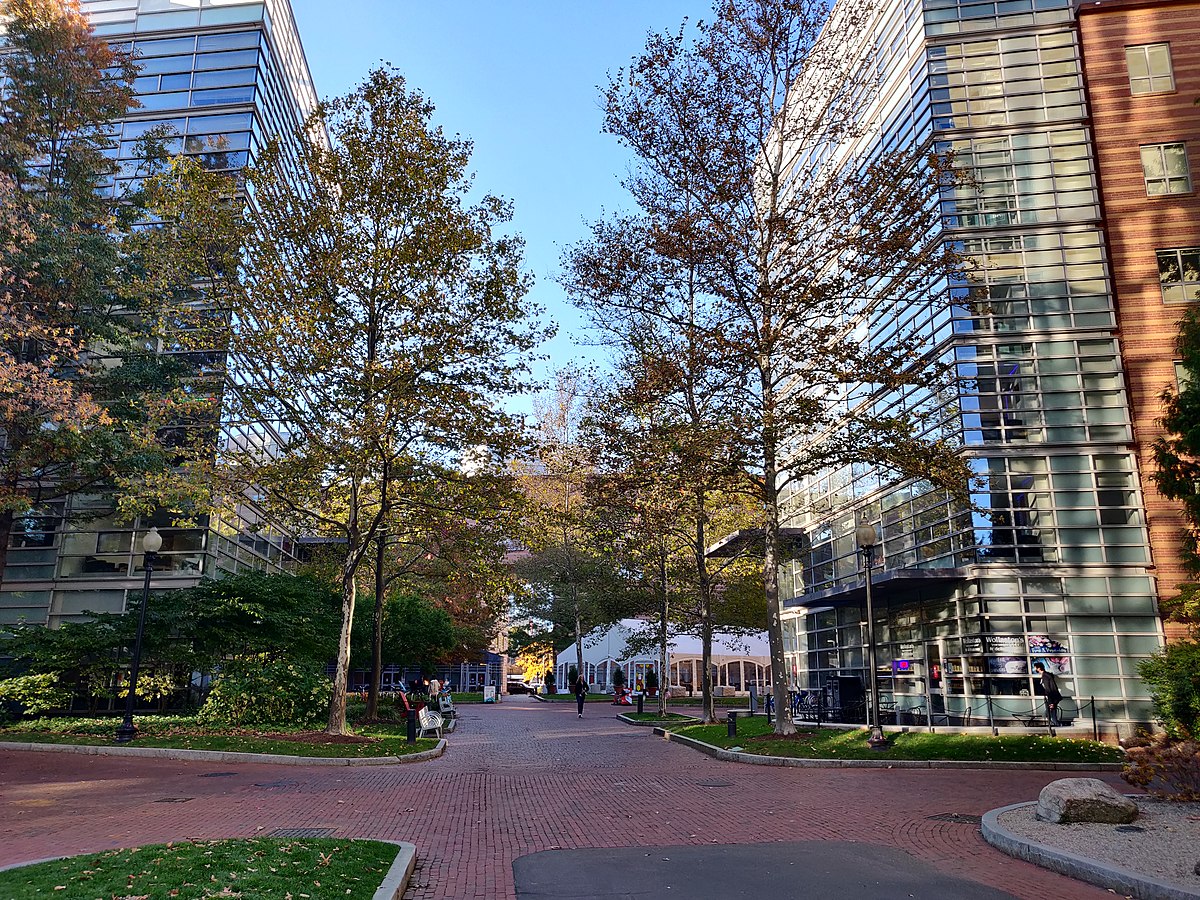
At Boston Shawarma near Northeastern University, employee Natalia Bermeo has watched the lunch rush dwindle over her four years at the restaurant.
“Some teachers at the university told us that one class that had 80 students now has 15,” said Bermeo, 25. “This situation affects all of the businesses, not just us—every business here is suffering.”
The restaurant has seen approximately 40% less revenue compared to last year, forcing occasional early closures when foot traffic doesn’t justify staying open. To survive, Boston Shawarma has maintained low prices, offers generous portions that can feed two students, and provides free water—small gestures of solidarity with the international student community, which faces its own financial pressures.
“We can’t offer discounts because we don’t have too much sales,” Bermeo said.
The staff is telling its own story. Where three employees once worked the afternoon shift during peak season, now only two cover each shift.
For international students already in the U.S., the mounting barriers create constant anxiety about their futures.
Navigating the complex visa process has become increasingly challenging under stricter enforcement measures. Students facing Visa uncertainties can turn to these key websites after getting I20 from their respective universities:
- U.S. Citizenship and Immigration Services for official visa requirements and processing times.
- StudyInTheStates for SEVP-certified school information and student visa guidance.
- NAFSA for advocacy updates and policy analysis.
- University-specific international student office websites for campus-specific guidance.
Additionally, essential paperwork should be maintained throughout their stay at the U.S, which includes:
- Valid passport (at least 6 months beyond intended stay).
- Form I-20 (Certificate of Eligibility for F-1 status).
- I-94 arrival/departure record.
- Financial documentation proving ability to cover expenses.
- Employment authorization documents (Social Security Number).
- Copies of all visa stamps and entry/exit records.
Teresa Ricapito, 25, an Italian and Northeastern University graduate with a biology degree, is currently on STEM OPT (Optional Practical Training) working at the Stefanato Group. Teresa moved to the U.S. when she was 16, and says, “After 9 years, it does become home.”
“It’s been 9 years since I moved to the United States. International enrollment always has ebbs and flows, but nothing that was kind of this extreme, now we have different rules,” said Ricapito. “With the government coming up with H-1B visas—a work visa that allows foreign nationals to work in specialty occupations—without clear clarification, both employers and employees don’t know where they stand in terms of sponsoring international students. Right now I stand on uncertain grounds in terms of sponsorship and I’m not sure if I’ll have enough time to apply for the lottery.”
For now, she is among the lucky ones: employed and legally present. But with the H-1B lottery opening in February and no clear answers about what the new rule actually means, even the certainty feels temporary.
She’s already thinking about backup plans—returning to school for another degree, moving to her company’s London office, and following her boyfriend back to Europe if his PhD plans change.
Students usually arrive in the U.S. with the F-1 visa, which remains valid for the duration of academic years. After graduation, F-1 students can apply for Optional Practical Training (OPT), which allows 12 months of work authorization in their field of study—or up to 36 months for STEM degree holders.
While H-1 B work visa allows foreign nationals to work in specialty occupations requiring specialized knowledge. Employers must sponsor H-1B applications, and the visa is initially valid for three years, renewable up to six years total. However, the H-1B lottery system creates uncertainty, as demand far exceeds the annual cap of 85,000 visas. With recent policy changes and a lack of clear clarification from the Trump administration, both employers and employees face confusion about sponsorship requirements and timelines.
Ricapito’s boyfriend, who prefers to stay anonymous, shares his recent experience highlighting the invasive nature of current visa processes. When he went to Milan to renew his visa, his passport was taken, and he received a rejection letter stating that the embassy would first review his social media before approval. He got out with a rejection letter and then in less than a week, he received his passport with an approved visa.
“They’re really looking at social media—it’s not just one thing they’re talking about. I think it’s a big invasion of privacy,” Ricapito said. “Knowing that they’re tracking it for sure made me more conservative in a way that I’m very scared of posting something, even if it’s a joke. I see a picture of something that I really feel about. I’m like, I strongly agree with this, but could this be misinterpreted? Could this be used against me? It makes me sad because I’ve always been a very strong personality, very upfront with my choice, with what I believe in. But right now, I don’t feel like I can be the voice of what I believe in because I’m scared that it’s gonna be used against me.”
Experts point to visa delays, travel bans, and stricter vetting under the Trump administration, including social media screening and suspended visas for citizens of 19 countries. Students from Iran, Ghana, and Nigeria faced some of the toughest restrictions, with visas valid for only three months and single-entry visas. Universities with a high concentration of international STEM students and graduate programs are already feeling the heat, and many graduate programs for the fall 2025 intake had to push back their arrival deadlines.
Elizaveta Anikina, 22, a Russian national studying Mathematical Finance and Finance Technology at Boston University, said, “I think the hardest part for us is that we don’t have a US embassy anywhere in Russia, so we have to travel all the way to Kazakhstan for a visa, which needs to be renewed annually.”
Anikina adds, “ The process was quite expensive. It cost me over $1000, including the visa process, commute, and accommodation in Kazakhstan.”
Some students refuse to speak about the visa process, expressing fear of deportation or threats from ICE (Immigration and Customs Enforcement).
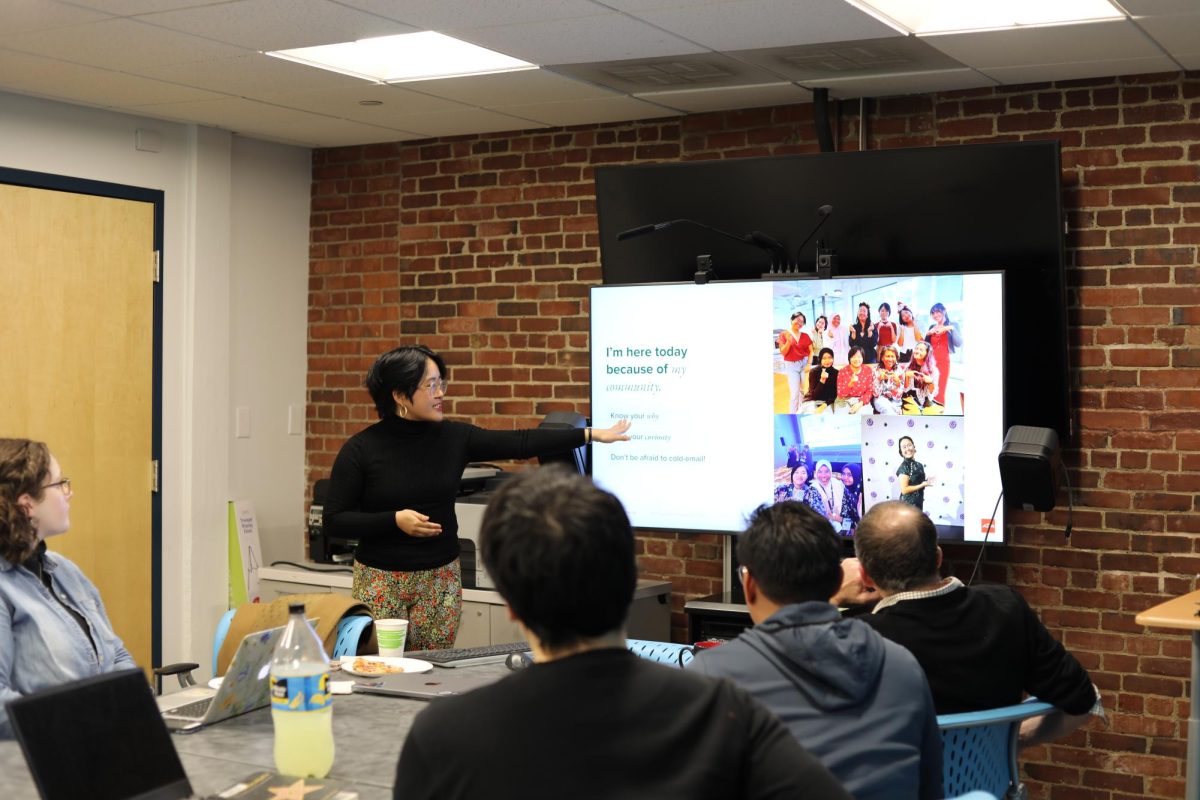
Deborah Archer, the first Black President of the ACLU (American Civil Liberties Union), was recently hosted by the Phillips Brooks House Association at the First Parish Church in Cambridge for winning the prestigious Robert Coles “Call of Service” award. She unified students and spoke to them about resilience in uncertain times like this.
“Don’t let the inability to do everything stop you from doing anything. Just do something”, said Archer to a room full of students.
In a one-on-one interview, Archer said, “I’ve been doing this work for 30 years. In many ways, it feels harder today than it has ever been because the tools that we have used to get us to this point are gone.”
The United States remains the world’s top destination for international students, but that lead is no longer guaranteed. In a global talent competition, being slightly less welcoming than before might be enough to fall behind.