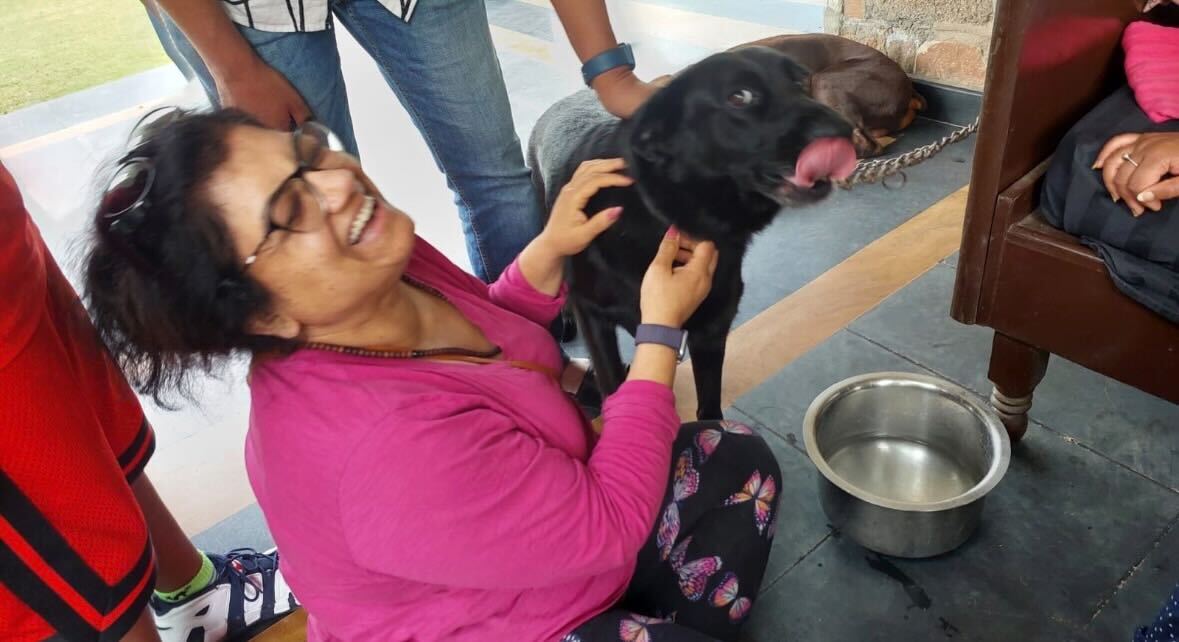
Richa Gupta, 50, never imagined her idle doodling during endless office hours would become a lifeline for abandoned animals across two continents.
Creative for a cause, Gupta, is an employee at Mathworks and founder of ‘Purrfect Henna’, a nonprofit animal rescue organisation born to honour her late cat. While her cost of living is maintained by her computing job, the money she makes out of ‘Purrfect Henna’ supports rescued animals in the United States and India. From importing jute bags and handwoven fabrics by tribal Indian women to carefully doodling on the mediums, Gupta sells her art at different pop-ups across the United States.
“My goal is to give home to fur babies across the world, while also empowering the tribal women of my home,” said Richa Gupta, an animal activist and humanist.
Originally from India, Gupta moved to the United States in 2003 as a dependent to her then husband, and soon became a student herself. With a background in Computers, she started her Ph.D at Harvard on gender studies and later switched to technology for living.
The Global Observer spoke about ‘Purrfect Henna’ mission,accomplishments and challenges to Gupta at Boston Durgabari, nestled in the woods of Hingham, where she carefully stacked her art at a fair, for the auspicious festivities of Durga Puja, commonly celebrated amongst the Bengali diaspora of the Indian community.
This conversation has been highly edited for clarity.
Give us a little insight on the birth of Purrfect Henna?
‘Purrfect Henna’ came into being in the year 2022,
In memory of one of my cats who passed away at 13. Losing him was heartbreaking, and I felt like I needed to channel that grief into something positive by doing something meaningful to help other animals in need, animals like him who were rescued and deserved a second chance at life.
With a little push from a close friend, my first event had a 6 foot long table, a bed sheet and a few henna cones. Much to my surprise, a crowd showed up for my henna artistry. That’s how I hosted “Purrfect Henna’s” first fundraising event.
Eventually, my nonprofit expanded from henna into artwork more broadly. The product line has grown and includes accessories, artworks and clothing, but the mission has stayed the same: to donate all of it for animals and women in need.
How many animals do you currently have at home?
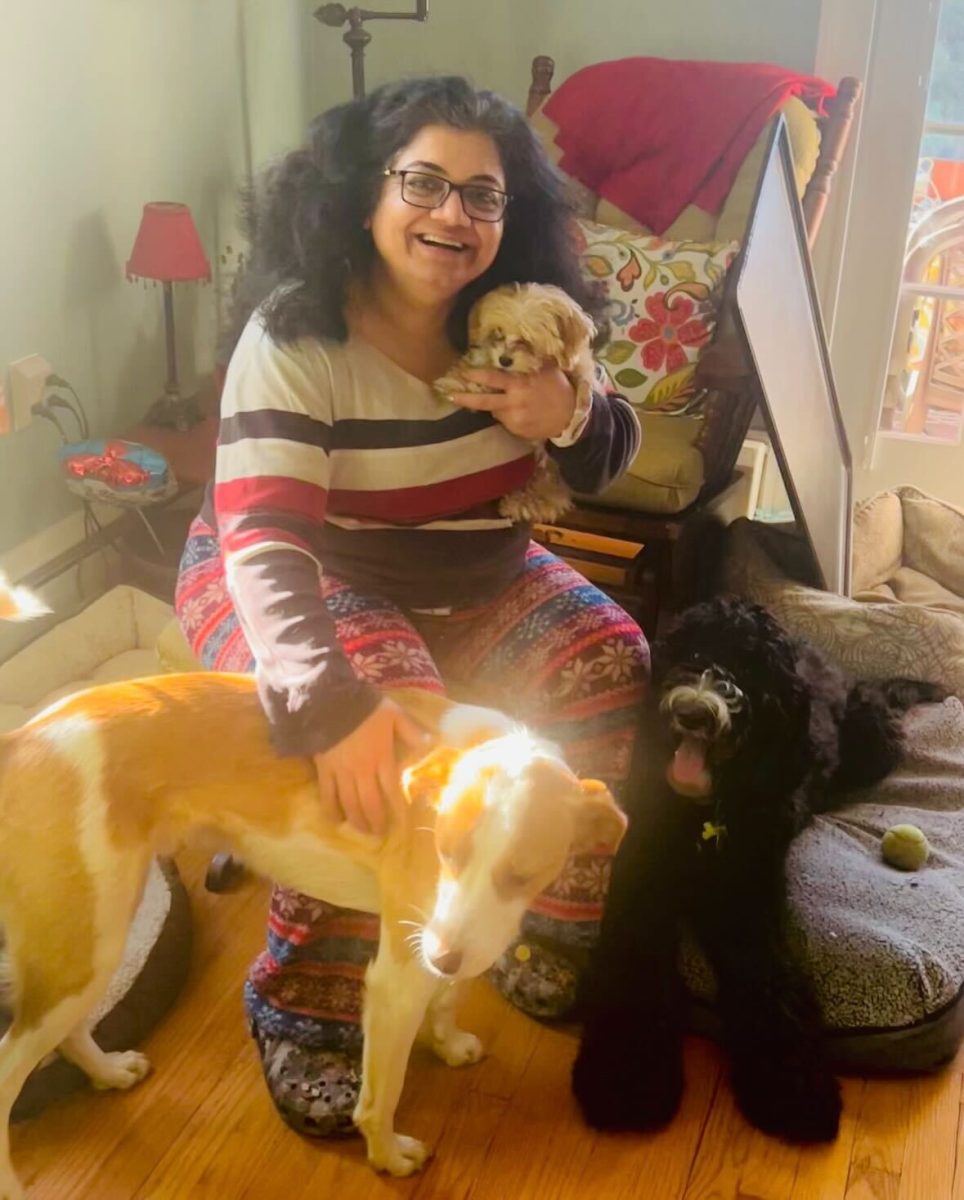
Right now, I’ve 8 furry friends living with me in Rhode Island. 6 of them are my own rescue animals – 4 cats and 2 dogs. On top of that, I’m currently fostering 2 kittens from an organisation based in Aruba. So that brings my total to 8 at the moment.
That’s quite a household. When you’re travelling for work or personal reasons, who takes care of all these animals?
That’s definitely one of the logistical challenges I face regularly. When I travel, my dogs get boarded with a family I trust. They are wonderful with animals and my dogs are comfortable there. For the cats, I’ve to hire a professional cat sitter who comes to my house twice a day to feed them, clean their litter boxes, and give them attention. It’s important for the cats to stay in their familiar environment because they get easily stressed with changes.
It’s a system that works for me, but definitely adds to the cost and complexities of travelling.
Kindly walk me through your business model. How do you support yourself and the non-profit financially?
To clear any confusion and to prove I’m no saint, my tech job at Mathworks is my primary source of income, and that’s what pays my bills. I work there from Monday to Friday, and that paycheque is what keeps me financially stable.
The money I make from ‘Purrfect Henna’, by selling customised products, solely goes to two causes — rescued animals and the tribal women community back in India, who provide me with the handwoven base material on which I craft doodles. I don’t take any commission out of the nonprofit.
What are the organisations you are currently working with here in the United States?
Here in the United States, I support several organisations all across, but initially I started with local rescue organisations in Rhode Island.
I’m a regular donor at Providence Animal Rescue League, which does wonderful work rescuing and re-homing animals in our area. I donate to the RSPCA, and I also support the Rhode Island Wildlife Rehabilitation Clinic, which treats injured wild animals and releases them back into nature.
Considering you are based in the United States, how do you operate back in India?
Back in India, the work is a bit different. There are a couple of registered non-profit organisations that I support financially, but the bulk of my India work goes to supporting individuals — grassroot rescuers who are out there every single day doing the hard, unglamorous work of feeding, spaying and neutering, and rescuing street animals. These aren’t people with fancy pay or big fundraising campaigns. These are ordinary people with extraordinary compassion.
I personally know a few young women and families in Jaipur who feed at least 27 animals every single day. They do it out of their own pockets, with very little support. Those are the people that I prioritise supporting on the Indian side.
What kind of volunteer work do you usually do locally?
I do quite a lot of hands-on volunteer work here because I’ve the advantage of being physically present. One of the main things I do is post animals for adoption. When local rescue organisations have animals who need homes, I help to create social media posts with photos and descriptions to give them visibility. Social media has become such a powerful tool for rescue, and I spent a lot of time doing that kind of digital advocacy.
I also do a lot of material fundraising for local organisations. Most rescue groups operate on shoestring budgets and they have wish lists of items they desperately need – blankets, sheets, towels, food bowls and cleaning supplies. I’ll organise donation drives or purchase and deliver them myself to the shelters.
Would you call ‘Purrfect Henna’ a sustainable nonprofit?
My goal with ‘Purrfect Henna’ is to practice sustainability, which means being mindful of environmental impact and social responsibility at every step. We, as an organisation, do a lot of manufacturing and fashion using upcycled fabrics.
Female artisans from India then use these base materials and transform them into beautiful finished products, which additionally get a personalised touch from my end. I work directly with these female artisans to ensure they receive fair wages – not pennies on dollars as they would get from middlemen or large fashion companies.
What are a few of the challenges you have faced in your endeavour?
I haven’t been able to scale it up because I’ve no partners. There are more expenses than people might think. Sometimes, I also pull funds from my savings. Just this year alone, I had to invest in upgrading all my shelving because I learned the hard way that when we do outdoor events, which is most of the time, it gets windy, and the display racks get knocked down. So I had to buy heavier, more stable shelving systems that can withstand outdoor conditions. That was an unplanned expense of several hundred dollars. Then there are ongoing costs: the fees to participate in markets and events, the cost of replacing inventory, the overseas shipping costs I mentioned, and gas for driving to the events.
With all these challenges, including physical exhaustion, financial strain, weather, lack of help. What keeps you motivated? Why do you keep doing this?
That’s a question I ask myself on hard days.
But the answer remains the same, I keep going because this work makes a real, tangible difference in the lives of animals who would otherwise suffer or die.
At the end of the day, I’m helping feed 300 animals daily. I’m supporting spay-neuter programs that prevent countless animals from being born into suffering on the streets back at home. I’m giving fair wages to women artisans who would otherwise be exploited. That’s what keeps me going. The work matters. The impact is real. And as long as I’ve the physical ability to keep doing this, I will.
Although sometimes I think about how much easier my life would be if I had a partner who shares this passion. I would love to find someone who loves animals the way I do and who loves volunteer work, who believes in giving back.
That would be such amazing support, both emotionally and practically. But until that happens, I keep doing this alone because the alternative — doing nothing — is unacceptable to me.
For more information about adoption, reach out to Gupta ([email protected]).