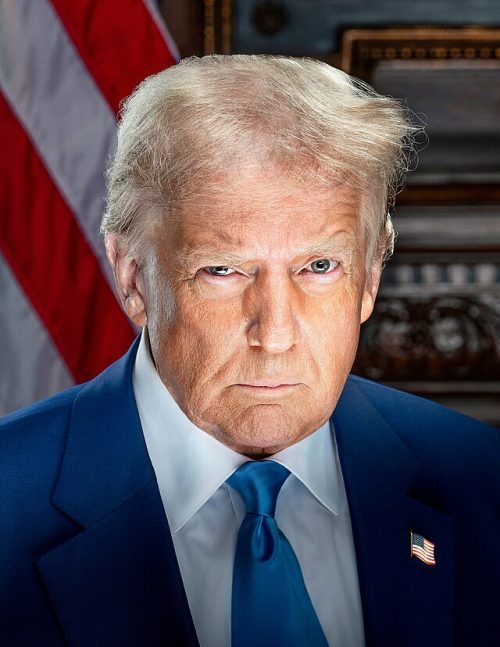
The price tag of the American Dream has jumped to $100,000. This is the fee imposed by the Trump administration this past September on employers filing new H-1B visa petitions, for people hired outside the U.S.
It is a punitive measure that inflicts enormous economic damage, and its purpose is not to regulate immigration but to stop it. Yet just two months later, President Trump appeared to undercut his own policy — he declared that the U.S. needs more skilled foreign workers. His comments highlighted tensions within his administration’s approach, angering MAGA supporters. Prominent MAGA influencers raged at Trump for suggesting immigrant workers are needed to fill specialized jobs. “What an atrocious thing to say,” griped a right-wing podcaster on Twitter, while others howled that Trump was betraying America First ideals. This backlash exposed the divisions within the right. Tech entrepreneurs, including Elon Musk, insisted that America has been “an immense beneficiary of talent from India,” while nativists scoffed at the program.
Since taking office, the Trump administration has treated the nation’s legal immigration system not as a strategic asset, but as a tool for political attack. It’s bad for immigrants who endure years of uncertainty and exploitation, and it’s bad for America, which ends up starving itself of innovation. The competitive advantage of the U.S. technology industry has been systematically undermined by a nativist agenda whose adherents would rather burn down the house than let foreigners help fix the roof. Welcoming talent from abroad isn’t a compromise; it’s a tech and economic imperative for the U.S. to stay competitive.
H-1 B “Slaves”
For Xiaqing Ren, a systems engineer at Nuvoton Technology Corp., these policy changes are not abstract headlines; they are the shackles of reality. Ren is highly educated, gainfully employed, pays taxes, and contributes daily to the U.S. tech sector. Yet he has lived in a state of confusion for a long time and lost the ability to plan his future.
“I’m thinking about move to Europe or go back home,” Ren told me, his frustration palpable. “My company has a branch there … my company is not sure about the new H-1B fee.”
Ren, who’s from China, had failed the H-1B lottery multiple times. To remain in the country, he had resorted to Day 1 CPT (Curricular Practical Training), a loophole that allows him to work while enrolled in another master’s degree program. This practice forced him to waste tuition and weekends pursuing degrees he didn’t need just to keep his job.
“Of course, I could stay in the U.S. with Day 1 CPT, but I also miss home and want to go back to visit sometimes,” Ren said. “Now I just can’t leave the U.S. I don’t like that.”
Among the Chinese people I’ve interviewed who work in the U.S., the cost of going home is prohibitively high in the limited time of vacation — not only the expensive plane tickets and two 14-hour journeys, but also the risk of being questioned and even deported by customs officials, especially those working in the semiconductor and other high-tech industries like Ren.
During our conversation, Ren mentioned an interesting term used among Chinese workers abroad called “H-1B slaves.” This term is harsh, but it reflects a cruel reality. Highly educated and skilled professionals have persevered through repeated policy changes and presidential transitions, all in the pursuit of obtaining work visas. They believe the U.S. offers a better future, but in the end, feel stripped of their autonomy and reduced to objects of government manipulation.
To understand the bitterness behind the term, one must look past the paycheck and at the power dynamics. The administration’s policies have turned the visa from a work permit into a set of golden handcuffs.
“As long as you need to rely on the H-1B lottery, you will be exploited by the company,” said Xiang Li, an ACAT specialist at Velox Clearing LLC. Her job is to help investors move their securities (stocks, bonds, funds) and cash between brokerage firms, which requires only one entry-level exam: the Securities Industry Essentials (SIE) exam. However, her company required her to pass two subsequent exams as a condition for a salary raise. Li did her best to find time to study amidst her busy work life and successfully passed the exams, yet a promised salary increase was not delivered.
“I was paid a junior-level salary but did a lot of work that wasn’t my responsibility,” Li explained.
“My boss knows we international students want to stay and participate in the lottery. If I quit or get laid off, all my eight years of hard work in the U.S. will be wasted, and I will face all sorts of problems … I don’t dare refuse any work forced upon me, and I don’t dare ask questions even if I pass the exam without a raise … This truly feels like slavery.”
The Trump administration has exacerbated this abuse by tightening the timeline for finding new employment after a layoff. The U.S. Citizenship and Immigration Services (USCIS) increased the issuance of Notices to Appear (NTA), documents that initiate removal proceedings before an immigration judge. It means that during the 60-day grace period after an H-1B termination, foreign nationals who are laid off or resign face the pressure and risk of both finding a new employer and being subject to deportation.
By making it nearly impossible to transfer visas or find new sponsors without incurring massive fees, the government has artificially destroyed the bargaining power of foreign workers. This contradicts the nativist argument that foreign workers steal jobs by lowering wages. In fact, it is the government’s own restrictions that depress wages. By trapping H-1B workers like Ren and Li in their current jobs, the government is subsidizing businesses that want to suppress wages.
H-1 B Growth
Supporters of Trump’s H-1B policies often justify these restrictions by citing the sheer volume of foreign workers. And they are not entirely wrong about the growth. There are about 730,000 H-1B visa holders currently in the U.S., and about 460,000 in 2013; the number has risen significantly over the last decade. For skeptics, these numbers might indicate a labor surplus.
However, interpreting this growth as a problem ignores the context of the leap in U.S. innovation. The annual lottery cap of 85,000 new H-1B visas has remained static since 2004, even as the U.S. tech sector has exploded in both value and scale.
The systemic issue of the surge in H-1B visa numbers is the outdated per-country limit on Green Cards, which expatriates can apply for only after they win the lottery. And because the U.S. sets a 7% cap on employment-based (EB) permanent residency visas, nationals from high-population countries such as India and China face decades-long waiting periods, creating a backlog and artificially inflating the number of H-1B visa holders.
“As I know, even if I win the lottery, I still need a company to sponsor me for EB-2 or EB-3 to get the green card. And for Indianans, we need to wait in line for ten years, even more, I think,” said Varun Singh, a master’s student at Northeastern University majoring in information systems, who will graduate at the end of 2026, but has already started to worry. “I’m not counting on this, it’s just impossible.”
Ultimately, the rising statistics are not the result of a labor surplus but of an overrun immigration system. By failing to address these immigration bottlenecks, the U.S. is not protecting its labor market, it is actively exporting its own competitive advantage. When the path to permanent residency becomes a dead end, promising graduates like Singh do not disappear, they take their American education and ambition to countries that are willing to offer them a future.
Economic Impact
The economic case against the Trump administration’s war on H-1B visas is overwhelming. The narrative that immigrants are replacing native workers is like a zombie that keeps coming back to life despite repeated data refuting it.
Research from the Federal Reserve Bank of Richmond found that companies that hire high-skilled immigrants through the H-1B lottery boost revenues and, over time, hire more U.S. natives than companies that are denied visas. In other words, bringing in foreign engineers or scientists yields net benefits, allowing these companies to expand and create more jobs overall rather than stealing jobs from Americans. Crucially, the study found that they “do not find evidence for displacement of native-born, college-educated workers at the firm level, on net.”
By aggressively restricting H-1B visas, the Trump administration is effectively hindering US economic growth. The proposed $100,000 fee is not a serious policy proposal, but merely a no-entry sign wrapped in red tape. This policy targets small and medium-sized enterprises that cannot afford legal fees or six-figure ransoms to hire the talent they need.
Kate Ruston, an immigration attorney at the Law Offices of Shamieh, Shamieh & Ternieden, said to me, “People always believe that if a foreign worker is fired, a local will automatically fill the place. But it does not work in high-skilled industries.” Basically, Ruston points out that the labor market is not a zero-sum game. A local hire cannot simply replace a specialized researcher or a chip designer if that local hire lacks the required skills.
Far from harming the economy, high-skilled immigrants are a proven boon for U.S. innovation. More than half of the billion-dollar startups (319 out of 582) were founded by immigrants. And nearly half of the Fortune 500 companies were also founded by immigrants or their children. Several major tech CEOs, from Google’s Sundar Pichai to Microsoft’s Satya Nadella, first came to the U.S. on student visas and later on H-1B visas. In the process, they created tens of thousands of American jobs. Tightening H-1B visas will not only shut people out, but it will also kill the next generation of visionary immigrants and Silicon Valley giants who would have created a vast number of new jobs in the U.S.
America’s Loss, Competitors’ Gain
In the knowledge economy, talent is the wealth. Around the world, countries are fiercely competing for the best talent. For generations, the U.S. has enjoyed an enviable advantage because well-educated young people dream of pursuing their goals in Silicon Valley, at Harvard, MIT, or on Wall Street. But this attraction has begun to wane in recent years.
While the U.S. is building higher barriers to entry, other countries are welcoming skilled immigrants. Canada, for instance, is actively seeking out frustrated H-1B visa holders. After a 2023 pilot program for H-1B holders filled 10,000 spots in just 48 hours, Canada announced plans in late 2025 to make this accelerated pathway permanent. China also just launched a new K‑visa program aimed at attracting top international talent to its tech sector. The program offers streamlined residency and perks for experts in fields such as AI and biotech, where China is striving for dominance. The European Union has expanded its Blue Card scheme, and individual countries such as Germany and France offer startup visas to attract entrepreneurs.
In short, global competitors are taking advantage of America’s mistakes. Whenever the U.S. tightens its skilled immigration policies, countries like Canada and China send a clear signal to disillusioned job seekers: Come here, we need you!
“If the policy does not welcome talent, of course they will take their skills to where they are needed,” said Carolyne Im, a research analyst focusing on race and ethnicity at Pew Research Center. “I remember Trump’s H-1B visa rejection rate was much higher than Biden’s … now he’s back, with his new policies.”
She’s right. During Trump’s first term, the rejection rates soared to 24% in 2018, compared to 5%-8% under President Barack Obama and 2%-4% under President Joe Biden. And in the long run, policies like the $100,000 visa fee are a losing battle for proponents of hiring Americans. They may deter some foreign workers today, but at the cost of America losing its innovative edge tomorrow.
Behind all the statistics and policy debates are hundreds of thousands of human stories. Every summer, bright young graduates celebrate their degrees from top American universities and hope to stay and contribute. But many of them face lottery heartbreak and the prospect of packing up their lives. When such stories become commonplace, it means the U.S. is losing its decades-long advantage as the global talent magnet.
Legacy of Failure
The tragedy of the current moment is that the solution is obvious, but the administration is blinded by ideology. A rational immigration policy would expand the H-1B cap, which hasn’t been raised significantly since 2004 despite the U.S. economy doubling in size. It would also eliminate the per-country H-1B caps that trap Indian and Chinese nationals in decades-long queues. It would strengthen the welfare and convenience for talents.
Instead, the Trump administration remains stuck in a cycle of populist outrage and bureaucratic incompetence. Even if the president recently acknowledged that America needs these workers, it may be too late. Trust has already been broken. If Trump administration continues to treat its most valuable imports as enemies, it will not be long before the world stops knocking at the door. And America First will again become America Alone.